From stock material to your component

Processing to your dimensions

Cut to size, prepared and processed: we combine our stock range with processing services for your order, from a single saw cut to a fabricated sheet metal part.

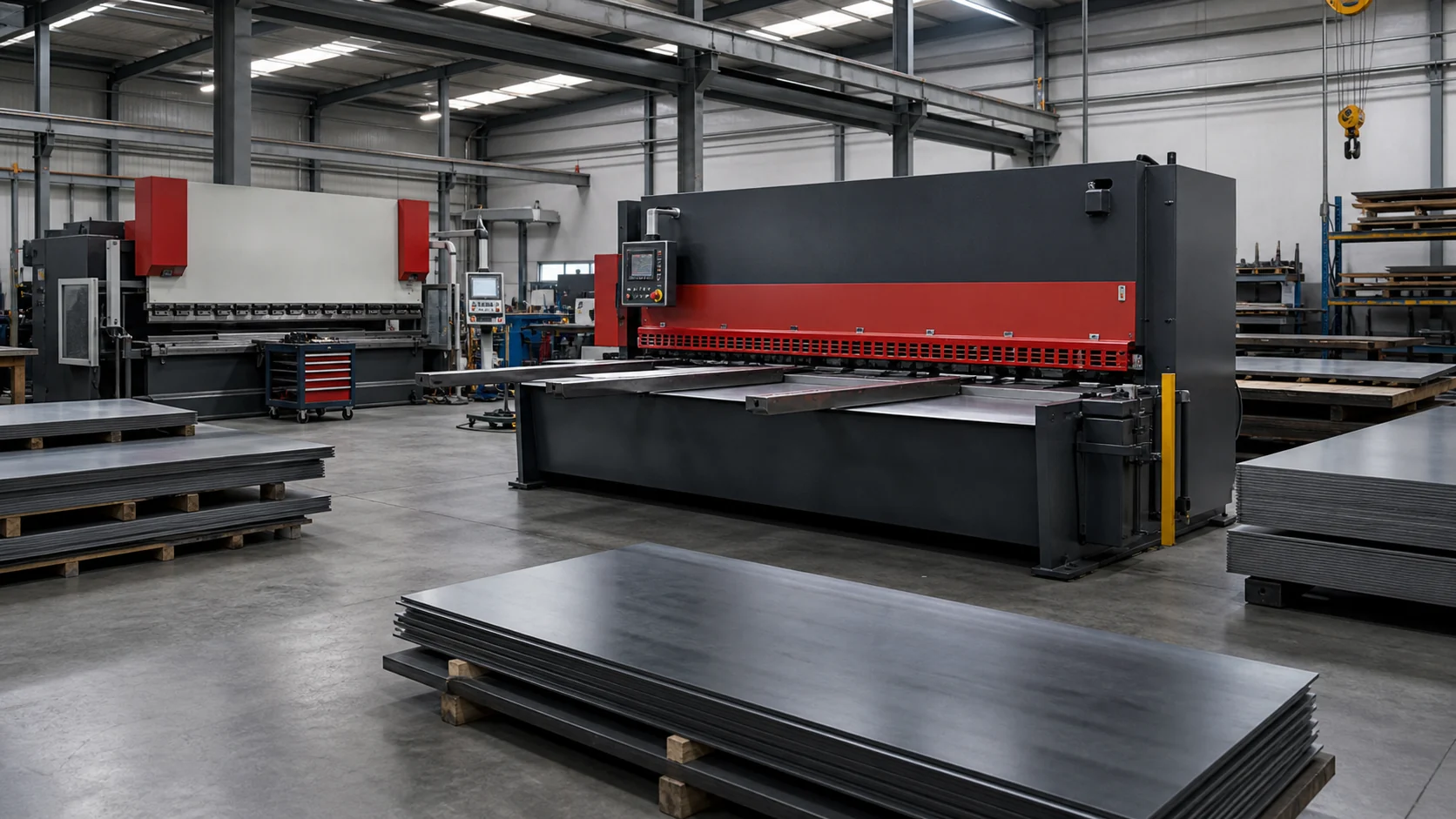
Sheet metal processing in a workshop
Cutting, shaping and surface preparation for your next production step.
All services at a glance

What would you like to make from your material?

Select a process to find out how it works, where it is typically used and which details we need for your enquiry.

We check feasibility against the material, dimensions, quantity and drawing. Tolerances, surface requirements and delivery dates are agreed before you place your order.

01

Sawing and edge finishing

Turn stock lengths into components ready for the next step. We agree cutting dimensions, angles and the required edge finish with you.

Cutting to fixed lengths

Bars, sections and tubes are sawn to your specified lengths. You receive material to match your cutting list, reducing cutting work in your own workshop. Different lengths in the same order can be clearly assigned to separate line items.

Typical applications
Frames, supporting structures and repeat components for metalworking and steel fabrication.
What we need from you
Section and material grade, finished length, quantity per length and required dimensional tolerances.
Enquire about: Cutting to fixed lengths

Mitre cuts up to 60 degrees

Mitre cutting means sawing the material at a specified angle, for example to join sections at frame corners or inclined connections. We offer mitre cuts up to 60 degrees. The possible cut depends on the section and its dimensions.

Typical applications
Frame structures, surrounds and angled connections.
What we need from you
A sketch showing the angle reference, long and short sides and the orientation of both cut ends.
Enquire about: Mitre cuts up to 60 degrees

Deburring and edge finishing

Cutting or drilling can leave burrs and sharp edges. Deburring removes these and prepares the affected areas for subsequent processing. If you also need a particular chamfer or edge shape, please specify it separately.

Typical applications
Parts that will subsequently be assembled, coated or further machined.
What we need from you
Edges to be finished and the required result, including dimensions for any chamfers.
Enquire about: Deburring and edge finishing
Back to the service overview ↑
02

Tube threads and surfaces

From prepared tube ends to a coordinated coating system: we match the process to the material and its intended use.

Thread cutting on tubes

Tube ends can be threaded for connection to matching components. Thread type and size must suit the intended fittings. We check whether the selected tube is suitable for the thread based on its material and dimensions.

Typical applications
Preparing tube sections for threaded connections.
What we need from you
Tube dimensions and wall thickness, thread type and size, thread length and whether one or both ends need threading.
Enquire about: Thread cutting on tubes

Blasting

Blasting treats the surface with an abrasive medium to remove, for example, rust and mill scale. This prepares the material for a subsequent coating system. The required surface condition is coordinated with the material, its initial condition and the next operation.

Typical applications
Preparing steel parts for priming or painting.
What we need from you
Material, dimensions, current surface condition and the requirements of the intended coating.
Enquire about: Blasting

Priming

A primer forms the first layer of a coordinated coating system. It prepares the surface for subsequent layers and can contribute to corrosion protection. The appropriate primer depends on the surface preparation, service environment and planned topcoat.

Typical applications
Prepared steel parts for subsequent painting.
What we need from you
Indoor or outdoor use, required coating system and areas that must remain uncoated.
Enquire about: Priming

Painting

Painting gives the component its required colour finish. Combined with suitable preparation and priming, it can also provide protection. Colour, gloss level and coating system are agreed according to the intended service conditions.

Typical applications
Visible structural parts, cladding and components requiring a specified colour.
What we need from you
Colour, for example a RAL reference, gloss level, service conditions and any film thickness or coating system requirements.
Enquire about: Painting
Back to the service overview ↑
03

Sheet metal cutting and fabrication

Sheet stock can be cut, folded or rolled into curved shapes. A dimensioned drawing helps coordinate contours and multiple processing steps.

Flame cutting

Flame cutting thermally separates the required contour from a steel plate. The resulting blanks can then be processed further at edges, holes or functional surfaces where required. Material grade, thickness and contour determine whether the process is suitable.

Typical applications
Base plates, gusset plates and individually shaped flat steel components.
What we need from you
Material grade, plate thickness, dimensioned contour, quantity and any machining allowances or cut-edge requirements.
Enquire about: Flame cutting

Sheet cutting to size

Sheet stock is cut to the required format, providing the dimensions needed for assembly or further processing. The suitable cutting method and finish are agreed according to the material, thickness, format and required edge quality.

Typical applications
Covers, cladding, insert plates and blanks for folding.
What we need from you
Material and surface finish, thickness, length and width, quantity and any visible-face or rolling-direction requirements.
Enquire about: Sheet cutting to size

Sheet metal folding

Folding bends a flat sheet along specified lines to create angles, channels or parts with several bends. Leg lengths, angles and bend radii need to be planned together so the finished part fits the intended assembly.

Typical applications
Folded sections, covers, surrounds and cladding elements.
What we need from you
A drawing with internal or external dimensions, bend angles, radii, material thickness and the required visible face.
Enquire about: Sheet metal folding

Punching

Punching uses a tool to cut a defined shape out of sheet metal, such as holes or openings. Feasibility depends on the available tooling, the material and the sheet thickness.

Typical applications
Repeated hole patterns, fixing holes and cut-outs.
What we need from you
Hole or cut-out shape, size, positions and edge distances, plus material, thickness and quantity.
Enquire about: Punching

Drilling

Drilling creates round holes at specified positions. Both the diameter and the location relative to the component edges are important. Additional operations such as countersinking or tapping must be specified and agreed separately.

Typical applications
Bolted connections, fixing points and assembly holes.
What we need from you
Hole diameters, spacing and reference dimensions, quantity and any special tolerances.
Enquire about: Drilling

Nibbling

Nibbling creates a contour through a sequence of small punching strokes. Openings and contours are gradually cut from the sheet. The individual strokes may remain visible on the cut edge, so any required edge finishing is agreed as part of the order.

Typical applications
Custom cut-outs and contours in sheet metal components.
What we need from you
Contour drawing, material and thickness, cut-edge requirements and any required deburring.
Enquire about: Nibbling

Sheet metal rolling

Rolling forms sheet metal into a curved surface. Unlike folding, it creates a curve over a wider area of the sheet. The required radius or diameter and the sheet thickness are important for checking feasibility.

Typical applications
Curved cladding, shell segments and cylindrical sheet metal shapes.
What we need from you
Internal or external diameter, sheet thickness, component width, arc angle and the required shape of the ends.
Enquire about: Sheet metal rolling

Back to the service overview ↑
Your next step

From your drawing to a suitable quotation

Does your component need several operations? Tell us about the complete task. We will coordinate the material, processing steps and required finish with you.

You can also reach us on +49 2151 45678-0.

For a detailed enquiry

  • Material grade, section or sheet thickness
  • Finished dimensions and quantity per item
  • Dimensioned drawing or sketch
  • Required operations and tolerances
  • Surface finish and intended use
  • Requested date and collection or delivery address

Find suitable material in our stock range. For delivery information, see logistics and transport.